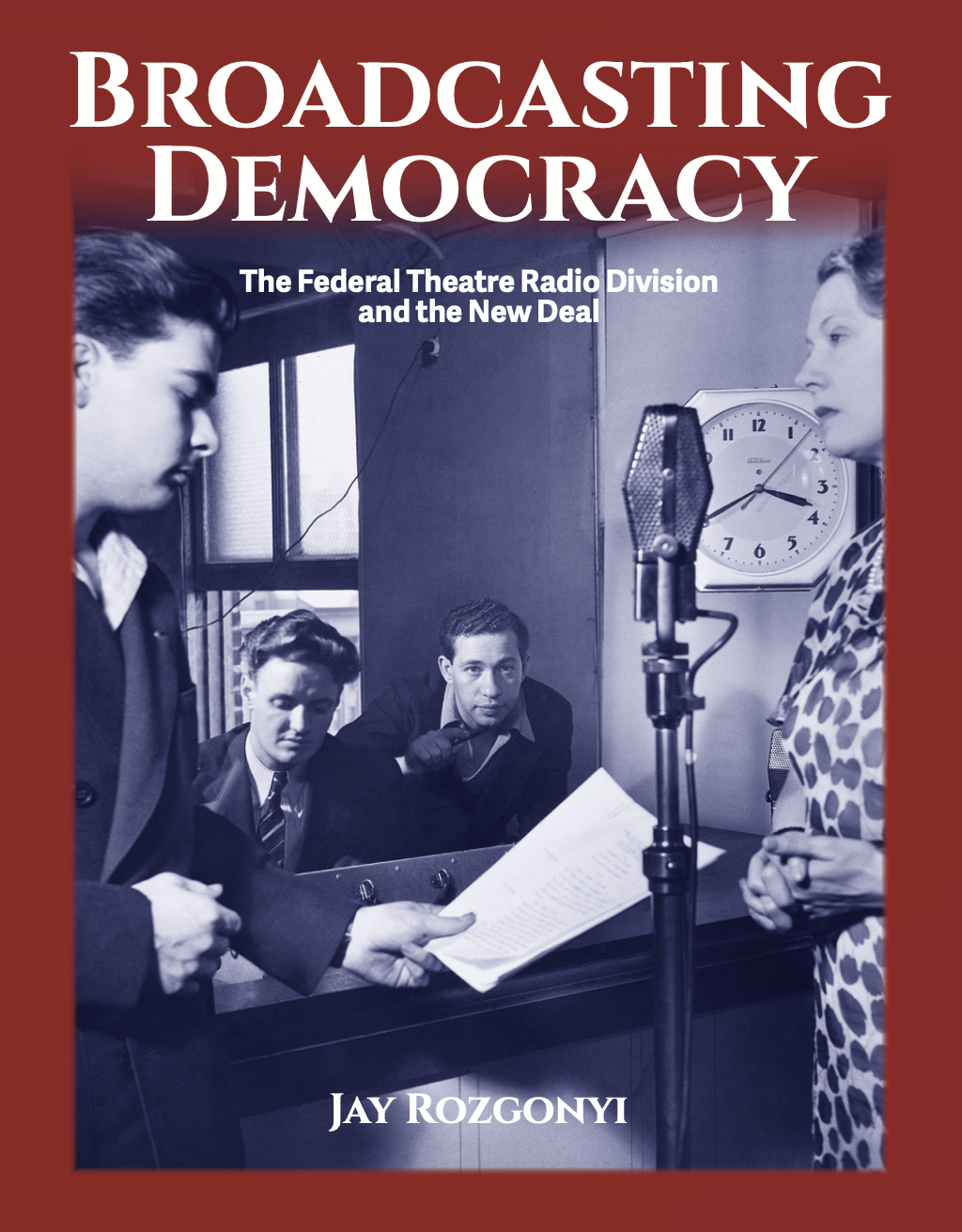
Broadcasting Democracy tells the remarkable story of a nearly forgotten New Deal program that brought politics, culture, and social change into millions of American homes. Between 1936 and 1939, the Federal Theatre Project’s Radio Division produced thousands of broadcasts that entertained listeners while quietly advancing a bold vision of a more democratic, inclusive, and equitable society. Drawing on extensive archival research, Jay Rozgonyi reveals how writers, actors, directors, and producers used the most powerful medium of their age to champion public health, workers’ rights, racial equality, arts education, and civic engagement. In the process, they transformed radio from a vehicle for simply selling products into a forum for imagining a better America. Part media history, part political history, and part cultural detective story, Broadcasting Democracy uncovers a fascinating chapter in the history of American broadcasting and offers a fresh perspective on the New Deal’s enduring struggle to shape public life through the power of mass communication.
Included are the full radio scripts of four dramas. The South (1936) is a sweeping historical pageant tracing the South from slavery through Reconstruction to the Depression, arguing that racial injustice and economic exploitation have held the region back while pointing toward a more democratic future. One-Third of a Nation (1938) is a dramatization of the American housing crisis that follows the lives of slum dwellers and exposes the human cost of unsafe, overcrowded tenements, making the case for public housing and urban reform. Altars of Steel (1939) is set in the steel industry and explores the conflict between profit and human welfare as industrial modernization enriches owners while placing workers' livelihoods and dignity at risk. Women in Industry (1939) examines the changing role of women in the industrial workforce, highlighting discrimination, unequal pay, mechanization, and the struggle for fair treatment and economic equality.
Jay Rozgonyi is an instructor in the Film/Television/Media Arts program at Fairfield University in Connecticut, where he has served as a professor and administrator for more than 30 years. He is the author of Preston Sturges’s Vision of America: Critical Analyses of Fourteen Films and contributed critical essays to O Brother, What Might Have Been: Three Lost Screenplays by Preston Sturges. He also co-wrote and co-produced the documentary film Dear Willy: World War II Through the Eyes of One of Hollywood's Most Prominent Couples, the story of acclaimed director William Wyler and his wife as told through their letters.